ASFO 2025–01–04

We humans, time–binding animals that we are, have now exhausted the first quarter of the twenty–first century. And what do we have to show for it? Colonies on the Moon, research outposts on Mars, expeditions to the asteroids and Jupiter? Peace, prosperity, and healthy ecosystems on Earth? Make better choices, children!

Supplementary Shows

  • 2025–01–07 “When we have something vital to say we can usually develop the means of communication. Today with our great vocabulary inheritance we squander meanings on unworthy causes and communicate little that needs to be said.” More of Utopia or Oblivion by Bucky Fuller, the tail end of Prevailing Conditions in the Arts, and the start of Keynote Address at Vision 65.
  • 2025–01–10 “We find that man is developing an increasing confidence in the way in which computers are resolving heretofore vexing and seemingly unsolvable problems.” Completion of Keynote Address at Vision 65, and beginning of Summary Address at Vision 65.

“A Step Farther Out” 2025 Shows

ASFO airs weekly at 19z00, with occasional bonus material at 15z00 Tuesdays or Fridays. Here you will find links to recordings of the shows from 2025, each accompanied by a brief description.

To understand what this show is about, and for recordings of the shows from 2021, go here. 2022 shows are here, 2023 shows are here, and 2024 shows are here.

  • 2025–01–04 We humans, time–binding animals that we are, have now exhausted the first quarter of the twenty–first century. And what do we have to show for it? Colonies on the Moon, research outposts on Mars, expeditions to the asteroids and Jupiter? Peace, prosperity, and healthy ecosystems on Earth? Make better choices, children!
  • 2025–01–11 The metaphenomenon of recurrent phenomena occupies a considerable part of my attention this week. Also, a recommendation for a book, The Flying Sorcerers by Gerrold and Niven ; a consideration of the Car Culture in America ; and a warning to be aware of the ape brain that lies between the lizard brain and the higher faculties of consciousness.
  • 2025–01–18 Has the capitalist owner–class, like its mediaeval equivalent (albeit with far less tangible reason), embraced the delusion that it represents a higher order of life than the working class? Will the USA, as a result, see a wave of CEO shootings in the coming year? Are our measures of historical time obsolete in the face of increased human life expectancy? Also, a little bit of astronomy, a little bit of space travel, and Mail Call! Two postcards from Canada this week, and a letter from Australia.
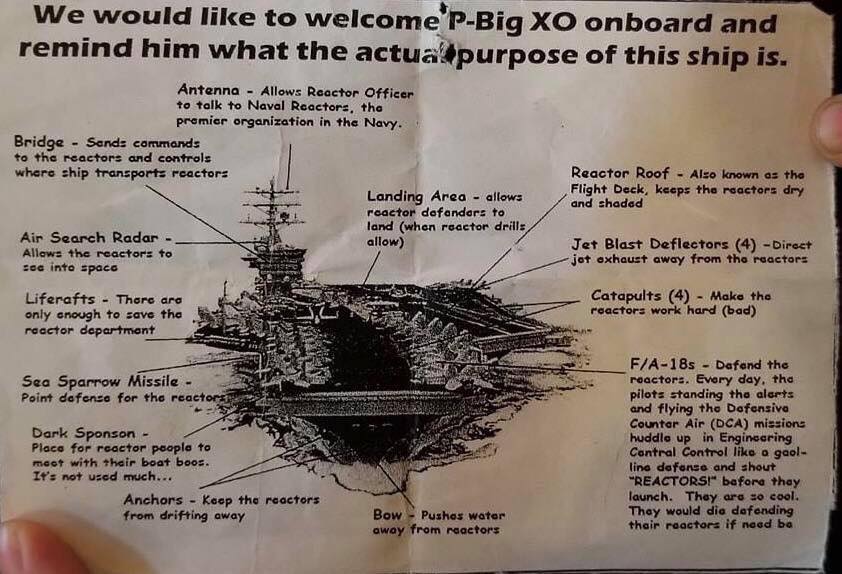
  • 2025–01–25 The present world situation, it is clear, is unsatisfactory — although hopeful signs are there to be seen for those who will but look. But why are those who have it all the most unsatisfied? Also, mixed news from Canada, stupid news from Chile, and even stupider, colossally stupid, news from Britain ; new additions to our archive of scanned nuclear–energy public–information materials ; and if you’re going to be in the Dallas area 14—16 February, come up and see us at FenCon.
  • 2025–02–01 Starting very late, about 15 minutes in as a matter of fact. I share some sensitive personal information about my family and friends, which is always a mistake, and lay out my expectations for the coming month, explaining why I may not be available to do shows regularly.
  • 2025–03–15 Beware the Ides of March! I’m not yet back to doing a full show yet, but please accept these few minutes of commentary about geopolitics, the latest semi–successful lunar landing mission, my dental well–being, and the potential of “generative AI” to provide an always–on, personalized cult leader for anybody who is even remotely, momentarily susceptible. Exciting times we live in, to be sure!
  • 2025–03–22 Can the lack of classical education be blamed for the failure of democracy, in the Soviet Union or elsewhere? Probably not, but it’s a nice thought all the same. Also, more Dental Drama™ ; a coda to last week’s show ; local outreach; and I offer a new approach to nuclear energy for the new German government, with a new slogan : “Pro–Nuclear is Pro–Europe”.
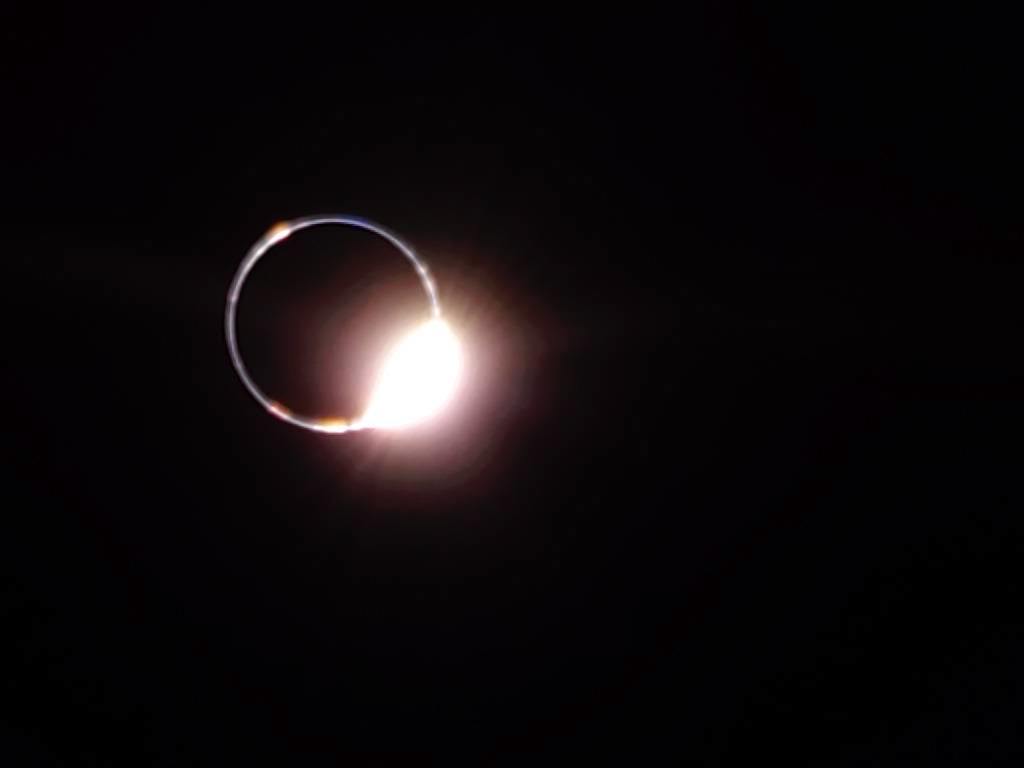
  • 2025–03–29 Support your local library! No solar eclipse for me — such a travesty. Family emergency, an earlier return to the USA than planned, and anxiety about when I may be able to leave again ; effects of weather on my outreach efforts ; reflections on the limits of “ephemeralization” ; a discussion of the rise of the anti–nuclear movement, and some text I am going to have to use again.
  • 2025–04–05 Anxiety about my upcoming return to the USA basically de–railed this show. I didn’t get to the things I was more interested in talking about, such as a recently–announced “nuclear battery”, because I felt the need to explain why the sudden imposition of large import duties can have a seriously damaging effect on a national economy, and even on the world economy in case of cascading retaliation. But I did manage to carve out some time to criticize the German educational system, and offer a critique of schooling generally.
  • 2025–04–12 Yuri’s Night! Find your local party. Mail Call! The significance of the prospective new power reactor at the University of Illinois. And more thoughts about industrial policy, world trade, and the old adage “it’s not the fall that kills you, it’s the sudden stop at the end”.
  • 2025–04–19 Stardrive! When will we get it, and how? Perspectives on a “nuclear battery” and an “all–woman spaceflight” ; a little more about tariff and non–tariff trade barriers and their utility, the adage “de minimis non curat lex”, and the straw–man of the “US–made iPhone” ; and likely–final remarks on the gold standard.
  • 2025–04–26 You can’t apply technological solutions to social problems — has there ever been a statement so widely and sententiously repeated, and so blatantly false? Also, the anniversary of the Chernobyl nuclear power plant disaster ; the world mourns a high–school teacher from Argentina ; progress toward blast №3 ; more on “nuclear batteries” ; and I talk a little about currency reforms.
  • 2025–05–03 Power outrage! in Iberia, and the Spanish Prime Minister runs his mouth off in a fashion which shows a disturbing degree of ignorance — and another in Pittsburgh, where the cause is a great deal more obvious. Also, more work on blast, and my advice for Mark Carney.
  • 2025–05–10 More public outreach — the Friends of the Haltom City Public Library annual Book Sale and Flea–for–All may seem an odd place to talk to people about atomic power, but you have to go where the people are. Also a quick calculation that Comanche Peak 1&2 have generated as much power since they came into service as 3700 large wind turbines in their whole working lives ; the new Pope and his priorities, with a quote from the famous encyclical letter of Leo XIII, On the Condition of the Working Classes ; and a scathing editorial from a Spanish grid executive and renewables proponent, explaining that the big blackout should not have come to a surprise, because integrating wind and solar into the grid is more expensive and difficult than the Spanish Government has been willing to face, and also pointing out that shutting down nuclear power is not compatible with reducing CO₂ emissions.
  • 2025–05–24 Looking realistically at the present world situation may not be good for one’s health. It certainly isn’t popular. I give a bit of an after–action report from last week, and try to contrast the Canadian (CNSC) and US (NRC) systems of nuclear–energy regulation. Neither is as good as it could be, but the CNSC model probably works better in practice. And I suggest that the Law of Unintended Consequences may be expected, occasionally, to produce unintended benefits.
  • 2025–05–31 No matter how many times I say it, it remains true : international air travel is for the birds! But at least the 6 line of the Munich subway is back in operation. Also I once again criticize the mindset that “nobody ever changed the world working 40 hours a week” — design and engineering decisions made by overworked people in understaffed offices are likely to be bad, or at best, less than good.
  • 2025–06–07 Brighton is in Britain (Blighty if you’re feeling mean), and this weekend, so am I. In this pre–recorded message, I invite you to consider the question of whether, from the viewpoint of Sir Thomas More, we may not already be living in the post–Singularity, trans–human future. Certainly the conditions of human life have been fundamentally altered since his day!
  • 2025–06–14 Once more with feeling — the people on this planet are crazy! And in that context, I discuss possible next steps, mine (which definitely involve one of which will be Archipelacon, and may involve turning blast into a newspaper, but I also can’t rule out a panicked trans–Atlantic flight) and other people’s. Also some very welcome news from Great Britain, ridiculously beyond any reasonable time–frame for it, but welcome.
  • 2025–06–21 Solstice! And a lovely sunny one here in Munich, just as it ought to be. That sunniness, however, doesn’t make paving over vast tracts of land with photovoltaics any more appealing. I suggest that the European Union could be quite a bit more ambitious with their targets for nuclear energy production, and explain things I’ve been doing to get ready for Archipelacon. Owing to some technical problem, while live listeners heard the whole show, the archive cuts off during my discussion of a so–called granola advertising “100% real food ingredients and no grain fillers”, which I would say makes it more like a trail mix — containing, of course, no peanuts.
  • 2025–07–05 Burn, baby, burn! Germany continues to exhibit climate leadership with less public transportation, more cars, and more gas–burning power stations. Where is the gas to come from? Who cares, as long as a return to nuclear is off the table? Also! The Vera Rubin Telescope, the Faraday Prize, the Non–Proliferation Treaty…
  • 2025–07–12 The inherent conflict between atomic energy and the Green mindset, explored ; Internet trouble ; Deutsches Museum ; a disappointing change to my travel plans…
  • 2025–07–19 Once again the double standard, as no calls are heard in Italy to abolish motor cars or their fuel, after an explosion in Rome which certainly harmed more people in that country than Chernobyl did. Unwanted travel forced upon me (at considerable expense) by short–sighted legislators and other foolish people. A couple of anniversaries — hail to the glorious 20th of July!
  • 2025–07–26 Back in Texas, working on blast №3, getting (or trying to get) other things done, considering a last–minute attempt at attending this year’s World Science Fiction Convention… Also speculation that politicians want to ban drugs because they compete with ideologies as intoxicants.
  • 2025–08–02 Questionable announcements abound in the field of nuclear energy, for instance from southwest Africa and the northwest USA, but you can trust the announcements I have about my future plans. Also, those in the space movement who started the year with high hopes are having to face facts ; and a brief consideration of just what it would mean for government to be “run like a business”, something many people in the USA have said that they want.
  • 2025–08–09 A minute of silence, please, for the 80th anniversary of the atomic bombing of Nagasaki. I spend some time, at the end of the half–hour, speculating on why otherwise intelligent and good–natured people believe and spread false statements about civil nuclear energy, and so far as I can tell, much of it comes back to The Bomb. In the middle, I explain more about my plans for the Worldcon ; somewhat unfairly use SDFer tyn, host of the excellent aNONradio show The Third Ear, to make a point about reading comprehension (the paper referred to can be found here) ; and question whether wasps qualify as radiation workers within the intent of the law.
  • 2025–08–16 Quoting myself? A bad habit, but sometimes I say what I mean best. “It’s good to grow some of your own food, but it is both morally and practically obligatory to get most of your Calories from industrial agriculture, because it uses two orders of magnitude less labour per Calorie. Anything else is headed back to serfdom, because Marx was quite right (and you won’t hear me say that often) that the mode of production strongly determines the form of social organization. Leave pastoral fantasies to the Far Right.”
  • 2025–08–23 Dispatches from Fortress America — more about the Worldcon, including tall tales of tomfoolery from the Hanford Nuclear Site — more about my long rail journey around the western USA…
  • 2025–08–30 Good news from Boca Chica, with a logistical note to say that nobody is going to Mars in 2026 ; hopeful news from outstate Michigan ; downright stupid news from Fairbanks, and some kind of answer to the question “what goes into a $200 million airplane, anyway?” ; bad news from Taiwan ; “is Europe failing?” ; and a meditation on what is and is not “political” which reflects on a great deal of other news.
  • 2025–09–06 Say goodbye to the Heath bar! Also, a new spin on germicidal UV lamps, what “nanotechnology” really is, words meant to stop thought, future plans for blast and the difficulty of finding local businesses…
  • 2025–09–13 Back in Munich, I find myself musing upon news from the USA which strikes me as less than newsworthy, news from Hungary which is not entirely surprising but could hardly have come at a worse time, and news from Mexico City which will probably be forgotten very soon.
  • 2025–09–20 Much of this episode is about travel, starting with my plans for the coming few weeks, and digressing to the Brenner Base Tunnel, and to Bucky Fuller’s fascinating idea that Man has long misidentified himself as a member of the vegetable kingdom.
  • 2025–09–27 Are the working poor of today better off than the kings of old? I provide one reason to think they are, and describe some of my adventures in international travel, and a really nifty pair of cuff links I bought in a charity shop for the princely sum of £2. Also a discussion of the finer details of nuclear waste disposal, in the context of asininity at Asse. Unfortunately this show was interrupted in the middle by some kind of network failure.

Supplementary Shows

  • 2025–01–03 “The domain of the virus is apparently the threshold between what we have known in the past as the animate and the inanimate.” Back to Bucky Fuller and Utopia or Oblivion — The Prospects for Humanity, which seems very appropriate as we begin this Glorious Future Year of 2025.
  • 2025–01–07 “When we have something vital to say we can usually develop the means of communication. Today with our great vocabulary inheritance we squander meanings on unworthy causes and communicate little that needs to be said.” More of Utopia or Oblivion by Bucky Fuller, the tail end of Prevailing Conditions in the Arts, and the start of Keynote Address at Vision 65.
  • 2025–01–10 “We find that man is developing an increasing confidence in the way in which computers are resolving heretofore vexing and seemingly unsolvable problems.” Completion of Keynote Address at Vision 65, and beginning of Summary Address at Vision 65.
  • 2025–01–14 “There is now a very large inventory of ways in which Man has been teaching, thinking, and accounting events and values which have no experimentally–demonstrated validity.” The remainder of Summary Address at Vision 65 just rounds out the hour (hey, it had to happen sometime), and provides the title for the book, Utopia or Oblivion.
  • 2024–01–17 “For every problem solved a plurality of new problems arise to take their place. But the problems need not be those of physical and economic survival.” More from Fuller, a short piece titled The World Game — How to Make the World Work, describing a very interesting computer simulation effort, and the beginning of a longer piece entitled Geosocial Revolution.
  • 2025–01–21 “The fundamental and prior problem of Man’s surviving successfully on this little sun–orbiting spaceship, ‘Earth’, cannot be solved by political theory and is not to be left to the politician’s ultimate lever — war — hot, subversive, cold, or cool.” More of Geosocial Revolution from Utopia or Oblivion by R Buckminster Fuller.
  • 2025–01–28 “With these interlinkages of the lever and channeled energy, Man is now in the wealth–making business, which is to use his brain to get nature’s vast energy patterns to do the energy work of supporting and regenerating him.” More from Geosocial Revolution in Utopia or Oblivion.
  • 2025–03–18 “Quite clearly, Man is coming into a completely new ecological relationship to his Earth, and quite clearly, we are accelerating into an entirely new relationship of Man to Universe. In speaking to you I have to take that statement as my fundamental premise, not just as an interesting aside. The problems of our moment are as unprecedented as they are vast. The solutions will have to be unprecedented and vast.” Picking up again with Utopia or Oblivion by Fuller, we finish “Geosocial Revolution” and begin “How to Maintain Man as a Success in Universe”.
  • 2025–04–15 “Anyone can use the telephone. Any two can have any kind of telephone conversation they want. They can call themselves communist, capitalist, or any other kind of name. The telephone works for either. But the telephone shrinks the world for both, and disasters can be averted by means of it, and when disasters occur it brings swift help from great distances.” More from Utopia or Oblivion, continuing with How to Maintain Man as a Success in Universe.
  • 2025–04–18 “The men and women who work on television get and hold their jobs through their diction, good vocabularies, confident tone, and pleasing personalities.” The conclusion of How to Maintain Man as a Success in Universe.
  • 2025–04–22 “Evolution is not confined to the organic man, but consists of the combined man and his environment.” The title piece from Utopia or Oblivion (1969) by R Buckminster Fuller. Also a recommendation for another book, Carry On, Mister Bowditch (1955) by Jean Lee Latham.
  • 2025–04–25 “Either war is obsolete, or Man is.” Conclusion of Utopia or Oblivion, but not of Utopia or Oblivion. Fuller discusses the reasons for failure of past forms of utopianism, and the radical differences in circumstances today.
  • 2025–04–29 “Because man’s legs are so short and the planet Earth so big and because the few areas around it where he could find immediate vital support in his early days on the planet amounted locally to less than 5% of the Earth’s surface, Man has mistakenly identified himself during the past eight millenniums with the rooted vegetation rather than with the mobile vertebrates of which type he is a member.” Continuing with Utopia or Oblivion, we have the whole of Curricula and the Design Initiative, and a first part of Design Strategy.
  • 2025–05–06 “Minmaxfamfax” is a clue that we are continuing with Design Strategy from Utopia or Oblivion. Also there is a thunderstorm going on in the background.
  • 2025–05–09 “California is the center of the outermost jumpoff pad of humanity’s springboard.” Concept 14, World Community and Subcommunities of World Man, means we have almost reached the end of Design Strategy, and with it, of Utopia or Oblivion. We will probably finish the book Tuesday.
  • 2025–05–13 “So ignorantly, myopically, and statically conceived and so obsolete is the whole housing art that its death led the Crash of 1929, since when its ghost script has been kept in rehearsal by US government subsidy at a total underwriting cost to date of $200 billion.” Finishing up Design Strategy, and moving on to the epilogue of Utopia or Oblivion. (Minor glitch at the beginning.)
  • 2025–05–16 “In this way we discover that the buildings, which controlled energy conditions of heat, cold, dry, and wet, were in effect machines because machines process and control energy. Because we are conditioned to think of the house as static, we fail to realize that the automobile is as much a part of the house as is the addition of a woodshed.” And with that, we complete our reading of Utopia or Oblivion : The Prospects for Humanity (1969) by R Buckminster Fuller.
  • 2025–05–20 PWRSD 1976 : A Snapshot in Time is a kind of yearbook from the nuclear power operation at Westinghouse. There is some fascinating material in it, including a description of an absolutely hair–raising bit of messing around with uranium in a metallurgical laboratory (not the Metallurgical Laboratory). Unfortunately, although the printing job is professional–looking, something awful seems to have happened in the galley stage, as more than once entire lines of text have disappeared.
  • 2025–05–23 Something of a mess, as I continue to read from A Snapshot in Time, but much of what I’m trying to read is tabular material.
  • 2025–05–30 More of A Snapshot in Time, largely a description of the Pressurized Water Reactor Nuclear Steam Supply System, interlarded with extensive explanations from me.
  • 2025–06–03 More from A Snapshot in Time, mostly an extended description of the corporate structure of Westinghouse PWRSD. Next time we will get to some more interesting material!
  • 2025–06–13 I finish up A Snapshot in Time with a brief but interesting section entitled Future, a series of questions and answers about nuclear power safety (meant to educate the public into acceptance, which may not actually work all that well), and some brief biographies of senior Westinghouse personnel. There is a glitch halfway through, owing entirely to my error and ill–preparedness.
  • 2025–07–25 From the group of Nuclear Power Exhibition materials I acquired, A Review of Nuclear Power in the United Kingdom, adapted from a lecture delivered by Francis Tombs, chairman of the Electricity Council, to the Institution of Electrical and Electronic Technician Engineers, 31 October 1977.
  • 2025–07–29 From Nuclear Energy Today and Tomorrow, a collection of lectures given at the 12th International Science School for High School Students at the University of Sydney (Australia) in 1969, Science and Society by Dr David Z Robinson, Vice–President of Academic Affairs, New York University.
  • 2025–08–01 The companion lecture to the previous, Society and Science, which describes among other things the political process which led to the location of what became Fermilab.
  • 2025–08–18 A conversation with smj in the hours immediately following the Worldcon, partaking somewhat of the character of an after–action report.

ASFO 2024–12–28

Key phrases for our final show of the year include “influencer–management companies”, “ten thousand Ronald Reagans”, and “the last full measure of devotion”. Also, the news from Finland should seriously call into question some of the more popular energy strategies, and the Chaos Computer Club is raising money for some folks who really need and deserve it.

Supplementary Shows

  • 2024–12–31 “The future development of mankind, on the spiritual no less than the material plane, is bound up with the conquest of space.” On this final (366th) day of the year, I take the opportunity to read Arthur C Clarke’s famous essay The Challenge of the Spaceship (the version from the 1961 book of the same title).
  • 2025–01–03 “The domain of the virus is apparently the threshold between what we have known in the past as the animate and the inanimate.” Back to Bucky Fuller and Utopia or Oblivion — The Prospects for Humanity, which seems very appropriate as we begin this Glorious Future Year of 2025.

ASFO 2024–12–21

Canadian retaliation? It’s more likely (and more effective) than you think! Also, a description of some potential future “Man and Atom” merchandise (or supporter premiums) I am working on ; Skylab helmets making a comeback ; and more of my thoughts on some of the many things people mean when they refer to “the gold standard”.

ASFO 2024–12–14

Pressure vessels occupy a great deal of my attention today, but gosh darn it! They’re important. Also postage stamps. Lots and lots of postage stamps. Give me an excuse to use them, won’t you? And a couple of comments about politics and current affairs, which I can’t totally ignore.

Supplementary Show

2024–12–17 The tail end of The Music of the New Life, and beginning of Prevailing Conditions in the Arts, from Utopia or Oblivion (1969) by R Buckminster Fuller.

ASFO 2024–12–07

The last third of this broadcast is a jeremiad against the schooling system in the United States, including a recommendation of a book with which I do not necessarily wholly agree, but which I find usefully thought–provoking : How to Survive in Your Native Land, James Herndon, 1971. We get there by way of some updates on my activities, reflections on democracy in various countries, and a consideration of the “precautionary principle”. (More discussion of the gold standard will have to wait.)

Supplementary Shows

  • 2024–12–10 “We can say that world society through overspecialization has reached the brink of extinction.” More of The Music of the New Life from Utopia or Oblivion : the Prospects for Humanity by R Buckminster Fuller.
  • 2024–12–13 “What we mean by understanding is : apprehending and comprehending all the interrelationships of experiences.” Yet more of The Music of the New Life from Utopia or Oblivion : the Prospects for Humanity by R Buckminster Fuller.

ASFO 2024–11–30

Heraclitus tells us that we can never step in the same river twice, so although you are surrounded by voices proclaiming that that the world is coming to an end, do not be deceived. The inevitability of change means that it is every bit as just, or unjust, to speak of beginnings as of endings. It is, perhaps, only natural to be afraid of the colossal opportunities that are even now opening out before us, but if we seek to shun them, we will only get changes we like less. Also, a bit more about the gold standard (hopefully I will finish with that next week) and erroneous ideas about “intrinsic value”.

Supplementary Shows

  • 2024–12–03 “Man is the great antientropy of universe” — Utopia or Oblivion : the Prospects for Humanity by R Buckminster Fuller (who else?), Introduction (Robert W Marks), A Citizen of the 21st Century Looks Back, and the beginning of The Music of the New Life.
  • 2024–12–06In is individually unique as a direction toward the center of any one system — but out is common to them all.” More of Utopia or Oblivion : the Prospects for Humanity by R Buckminster Fuller, continuing with The Music of the New Life, and a discussion of the importance of flush toilets over any other educational facility.

ASFO 2024–11–23

Mail call! Did Russia actually launch an ICBM with no warhead against Ukraine? The Steppenwolf Plan for disarmament. And, more of the story of the gold standard : Isaac Newton enters the picture.

Supplementary Show

  • 2024–11–26 The Treaty of Peace between the United States and Germany, and a list of other treaties arising from the Paris Conference of 1919.
  • 2024–11–29 “German Observations on the Conditions of Peace” (with a liberal helping of well–deserved sarcasm) and the Allied reply.

ASFO 2024–11–16

In which my motivations for reading selections from an annotated version of the Treaty of Versailles are, perhaps, revealed, and the vexed question of German War Guilt is examined ; along with an attempt to introduce some of the basic concepts of banking and currency, with the intention of eventually explaining the various things that might be meant by a person referring to “the gold standard”, and the contexts in which these meanings arise.

Supplementary Show

  • 2024–11–19 More from the annotated Treaty of Versailles, and specifically the Covenant of the League of Nations.
  • 2024–11–22 After a bit of a glitch at the start, mostly the Preface and first section, “The Paris Peace Conference, 1919”, of The Treaty of Versailles and After.

ASFO 2024–11–09

What is good in life? (wrong answers only) — oaths of fealty, and the question of how far self–interest actually predicts human motivations — immigration, and what it has to do with Don Quixote. And the Preamble and Chapter I of the Charter of the United Nations, for those requiring a refresher.

Supplementary Show

  • 2024–11–12 Dulce et Decorum Est by Wilfred Owen ; the Preamble and Chapter I of the Charter of the United Nations ; the Universal Declaration of Human Rights ; and some material from a US Government publication entitled The Treaty of Versailles and After, including the resolution of 18 April 1946 for the dissolution of the League of Nations.
  • 2024–11–15 More from the annotated Treaty of Versailles, specifically the Covenant of the League of Nations.