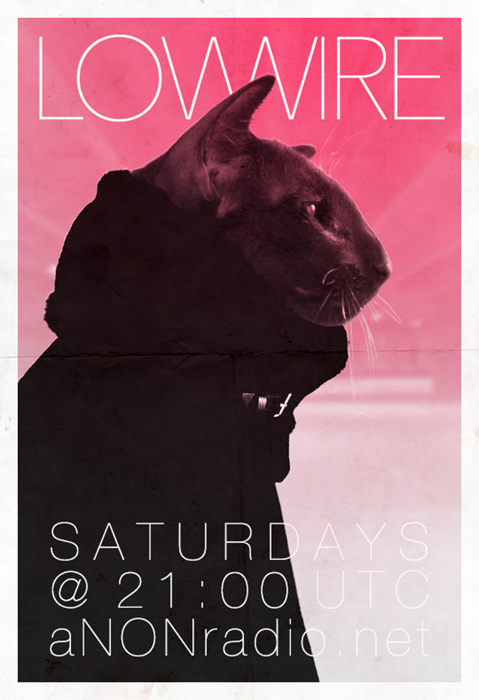
My apologies, family obligations and forgetfulness is the cause of my absence. I haven’t disappeared, just have been insanely busy. Going to finish the track lists that were in drafts that I never got around to posting. From this point forward I do have a reminder set on my phone so I don’t forget.
I wanted to return this week, but a napping 2yr old niece and AC issues are making that impossible. It’s like 86 degrees indoors right now.
Tales From SYL Ranch
Sunday, May 28, 20:00-22:00 UTC
This week, we’re taking a break from the Old Fan’s Commentary. Don’t worry, it will return. We’ve already got several episodes of Star Trek: The Original Series and The Animated Series recorded. We’re holding back Superman for its 40th Anniversary. Close Encounters Of the Third Kind will be along soon.
?
There’s also a Commentary for ▥▥▥▥ ▥▥▥▥ ▥▥▥▥ ▥▥▥▥▥ ▥▥ ▥▥▥▥ ▥▥▥▥ ▥▥▥ ▥▥▥▥▥ coming up. We’ve no idea when. We’re just making it up as we go along.
Otherwise, we’re going full Old-Time Radio with a Martian twist.
Ray Bradbury
We’ve also gone a with decidedly Ray Bradbury emphasis. Two shows are adaptations of The Martian Chronicles. The third is an experimental 1973 re-mounting of X-Minus One.
The earliest episode, “The Martian Chronicles,” originally aired on August 18, 1950.
In 1950, nothing we’ve come to take for granted existed. There was no entertainment of the kind we’ve come to expect. There was radio, movies … and that was all.
Audio recordings were unknown because the only reel-to-reel tape recorders were physically huge and prohibitively expensive.
The only computers in existence were the size of warehouses. The phone in your pocket can do more, and billions of times faster.
Typical 1950 TV signal.
Television was a nascent industry, and entirely black-and-white. Some homes had TVs, but never more than one. They produced a grainy, low-definition, analog, broadcast-quality picture. The signal could be destroyed by all manner of nearby electromagnetic activity. Running the vacuum cleaner would obliterate the picture. Nearby storms would do the same. If you were too close or too far from a station’s transmitter, the picture would become filled with static.
Arvin Table Radio, Model_480-TFM
Radio was king, however it suffered from the same problems as television. Sound quality would be unacceptable by modern standards.
As with modern television, networks provided shows to local affiliates. These shows were exactly the same as today’s TV. There were news programs, daytime soap-operas, dramas, situation comedies, cop shows, detective shows, and science fiction. They had similar stories, told through sound rather than video.
There were advertisers as there are today. In two of Sunday’s episodes, the advertisements are included. You’ll immediately recognize one sponsor that’s still in business.
Of science fiction, there were two undisputed kings: Dimension X and X-Minus One.
Dimension X aired 50 weekly episodes from April 8, 1950 to September 29, 1951. X-Minus One aired 126 weekly episodes from April 22, 1955 to January 9, 1958.
X-Minus One Advertisement
X-Minus One was essentially a re-mounting of Dimension X with many of the same production personnel. One can almost speak of both series in the same breath.
Both featured half-hour adaptations of the best science fiction short-stories then published, from the premiere SF magazines of the time: Astounding and later Galaxy magazines.
Famous names include Isaac Asimov, Robert A. Heinlein, Ray Bradbury, Kurt Vonnegut, H. Beam Piper, and a host of others. I strongly encourage you to listen to both series. All episodes are in the public domain and are easily-accessible on the Internet Archive.
Most stories are of excellent quality. As nearly all originate with the best authors of the day, stories hold up well and can easily be translated to modern times.
Audio quality varies. Some episodes only survive because someone with a wire recorder captured from the radio speaker itself. On Tales From SYL Ranch, we try and bring you episodes that survive from the studio masters.
Mars Of 1950
Mars in 1950
Until telescopes improved and probes sent to Mars, some of the best scientists of the day thought that Mars might be habitable and/or inhabited. Until the mid-1960s, many serious science fiction stories about a habitable Mars were written.
It’s little-known, but Gene Roddenberry‘s 1965 pitch for Star Trek limited the Enterprise‘s explorations to “planets approximating Earth-Mars conditions, life and social orders.”
Arguably the the most famous Mars story is Ray Bradbury’s The Martian Chronicles. To attempt to describe it is impossible. We strongly recommend that you read it.
While the locale of Mars has long-since been rendered problematic, the story holds up well. If one simply substitutes an extra-Solar Earth-like planet for Mars, the plot and story could be written today.
Chesley Bonestell’s Mars Rocketpad
Some projections of technology are also now problematic. It’s worth noting that Bradbury predicted the Smart Home, though in a more esoteric fashion than we see today. As always, one must remember that writers were projecting forward from 1950s technology. They could never have dreamt of the technological wonderland of 2017.
Aside from that, one simply has to use one’s imagination a bit more. Good Old-Time Radio shows let the listener follow the action via sound effects. Mediocre and bad ones (with the exception of Dragnet) narrated.
The only narration Sunday is in “The Martian Chronicles.” That’s forgivable given the impossible task of reducing multiple short-stories and novellas to a half-hour show.
A family gathered around their radio.
So sit back and transport yourself to another era where radio was king. Imagine sitting in the living room, the family crowded around the radio, listening in earnest to The Martian Chronicles.
Update, Sat Jun 3 17:58:46 UTC 2017:
As a consequence of the following videos, I’ve added a libertarian rant. It cost me three of the regular tracks, as time was very tight.
Willy Ley encountered this Mars story in a German translation, and, failing to find the English original (possibly hampered by looking for it under the title Beyond the Zodiac, but Percy Greg was apparently a well-known English author), considered that it might be actually German. The confusion was not helped by the fact that author Greg presents himself as translating a found manuscript. Sam Moskowitz considers it the genesis of the Mars romance so characteristic of the early period of modern science fiction.
Tales From SYL Ranch
Sunday, May 28, 20:00-22:00 UTC
The Old Fan’s Commentary On
Forbidden Planet
Forbidden Planet is a somewhat different film in terms of a commentary. It’s arguably the best science fiction film of the 1950s.
Sturgeon’s Law: 90% of Science Fiction is crap.
The 1950s was in some ways similar to the 1980s. Following Star Wars, science fiction exploded in films. However, Sturgeon’s Law held, and 90% of it was crap. Most were consigned to the ashbins of VHS. Some have been re-released on DVD and Bluray for a niche market that likes terrible movies.
The 1950s were similar. The Atomic Age brought with it the idea there would soon be a massive breakthrough in power. They assumed that some day soon, your home or even your car would be nuclear-powered. This triggered an avalanche of science fiction films.
Sturgeon’s Law: 90% of Science Fiction is crap.
Sturgeon’s Law was as true then as today. 90% of it was crap. A lot of them haven’t survived at all. The ones that did seem incredibly primitive by today’s standards.
Forbidden Planet was one of only two or three stand-out films of the 1950s. This was in no small measure because it was produced by MGM.
At the time, MGM was among the premiere film companies in the world. It didn’t lend its name to half-baked projects. If MGM made a musical, it was a brilliant musical. If MGM made a western, it was a brilliant western.
Leo, the MGM Lion
MGM would never produce Plan 9 From Outer Space, nor giant insects, nor 50-foot-tall women. If MGM was going to lend its name to science fiction, it was going to be brilliant science fiction.
The result is Forbidden Planet. It was glorious. Cultural conceits and technical limitations aside, its ideas and plot still hold up today.
Monsters from the Id.
The special effects, while somewhat dated today, were landmark at the time. Even today, some hold up.
The science behind the technology of the film was extremely well thought-out. It looks somewhat dated today but even now it’s very well thought-out. Where it needed technobabble and Hand-Wavium, it was reasoned technobabble and Hand-Wavium.
As always, to set the stage:
This time you have to back farther than me. I first saw Forbidden Planet at the Rigel IV convention in Lincoln, Nebraska. The convention marked my entrance into Star Trek fandom. Until that time, I’d been an individual fan with a bare understanding that fandom existed somewhere. After Rigel V, I was in it for life.
However, I was born in 1965. Forbidden Planet was released in 1956, nine years before.
It was a different world, and one I can only imagine. My only exposure to American culture of the time were my parents’ occasional stories, fictional movies and TV shows, and my own observations on the changes in culture since my birth.
As near as I can determine, this was the world in 1956:
There was nothing that we think of as entertainment. There was television, radio, phonograph records, and personal pastimes (reading, involvement in local sports or organizations, etc).
The commercialization of television was just getting into full swing. Imagine the Internet in the late 1990s. No one but the fabulously wealthy could afford more than one TV. The picture was grainy, low-definition, analog broadcast. The vacuum cleaner could obliterate the picture, not to mention storms.
We actually had to do this. I’m not kidding.
To receive TV signals, you needed an antenna (think of it as a low-tech satellite dish). By the time I was born, these antennas dotted the roof of every home and apartment complex. In 1956, one often used a much smaller, less effective interior portable antenna.
The picture still sucked.
There were only three networks (four if you were charitable and counted PBS — which no one did). They didn’t run 24-hour programming. It was typically only 6am – midnight.
TV was black-and-white. Commercialization of color wouldn’t come for another ten years.
There was one phone, a land-line to the house. Sound quality anywhere but in your local town or city was terrible. International calls were spotty at best — not to mention fantastically expensive.
Nothing we take for granted existed. Not even air conditioning had reached the average home. Indeed, air conditioning was a major selling points of movie theaters of the day.
(Ask my kids about the time we went to Blonde Ambition just to get away from the oppressive heat of July in the Upper Great Plains.)
From the Sears Catalog, Spring/Summer 1958
Fashions were radically different for both men and women. Men wore suits and hats. Women wore dresses and rather complicated undergarments. Jeans were becoming acceptable on pre-adult males, but no one over the age of 18 would be found at a job without his suit and tie.
It was certainly a more prudish culture than we think of in 2017. Sex outside of marriage was actively discouraged even by other women. A skirt with a hemline above the knees marked a woman as a slut.
Men were expected to be bread-winners. If one relied on one’s wife for any source of income, a man was shamed by other men. Taking hand-outs from the government, or charity of any kind, was seen as a character flaw. Such a man was a bum, pure and simple.
Religion played a much larger role in American life. Where some 30% of Americans now identify as atheists, the number in 1956 was so low as to be statistically insignificant.
That’s the most I can tell you about the era. I wasn’t there. All I can rely on is history. To my knowledge, that’s what things were like in 1956.
If you’d like to follow along with the commentary, a DVD-quality stream will be available during the live show. After that, you’re on your own.